
Need To Lower Your Cholesterol? Do These Two Things
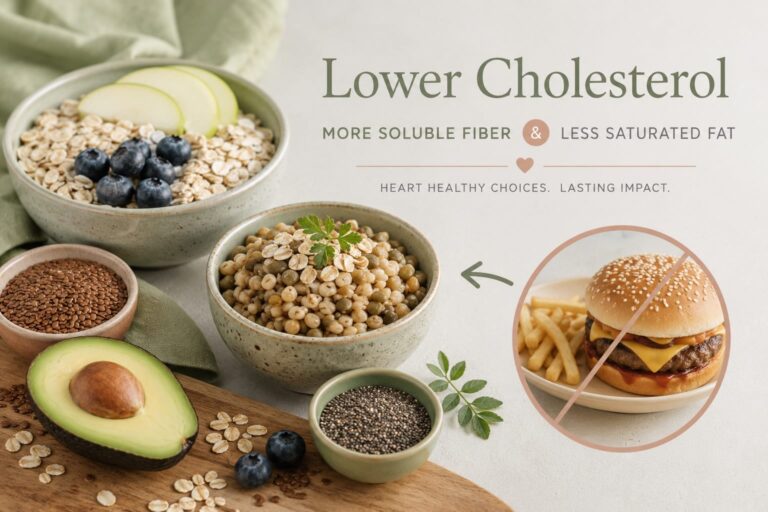
If you’ve recently been told your LDL cholesterol is high, it’s easy to feel overwhelmed by all the nutrition advice online. But when it comes to lowering LDL (“bad”) cholesterol, two dietary strategies consistently stand out because they directly affect how cholesterol is handled in your body:
- Increase soluble fiber
- Lower saturated fat
These two changes can make a big difference in LDL cholesterol levels, and you do not have to eat perfectly to benefit.
First, What Is LDL Cholesterol?
LDL cholesterol is often called “bad cholesterol” because high levels can contribute to plaque buildup in the arteries over time. That buildup can increase the risk of heart attack and stroke.
Your liver plays a major role in regulating cholesterol. The foods you eat influence how much cholesterol your liver makes, absorbs, and removes from the bloodstream, and both fiber and saturated fat have a huge impact on how your liver handles cholesterol.
1. Increase Soluble Fiber
Soluble fiber dissolves in water and forms a gel-like substance in the digestive tract. This type of fiber has a unique ability to help lower LDL cholesterol.
How Soluble Fiber Lowers Cholesterol
Your liver uses cholesterol to make bile, a substance that helps digest fat. Bile is released into the intestines during digestion.
Normally, much of that bile gets reabsorbed and recycled by the body.
But soluble fiber acts almost like a sponge. It binds to bile in the digestive tract and helps remove it through stool instead of allowing it to be reabsorbed.
Because bile is being lost, the liver has to pull more cholesterol out of the bloodstream to make new bile. As a result:
- LDL cholesterol levels decrease
- More cholesterol is removed from circulation
Soluble fiber may also help lower cholesterol through its effects on the gut microbiome.
Certain types of soluble fiber act as prebiotics, meaning they feed beneficial gut bacteria. When these bacteria ferment fiber in the colon, they produce compounds called short-chain fatty acids (SCFAs) such as butyrate, acetate, and propionate.
These SCFAs may help reduce cholesterol production in the liver and improve how the body regulates cholesterol overall. Researchers are continuing to study this connection, but it is one more reason fiber-rich diets appear so beneficial for heart health.
Soluble fiber can also help slow digestion, improve fullness, and support more stable blood sugar levels.
Foods High in Soluble Fiber
Some of the best sources include:
- Oats
- Barley
- Beans and lentils
- Apples
- Pears
- Citrus fruits
- Chia seeds
- Ground flaxseed
- Brussels sprouts
- Sweet potatoes
Practical Ways to Eat More Soluble Fiber
You do not need to overhaul your entire diet overnight. Instead, try small, consistent changes.
Easy Ways to Start:
- Add oatmeal or overnight oats at breakfast
- Include beans in soups, tacos, bowls, or salads
- Add fruit to snacks instead of only processed snack foods
- Toss chia seeds or ground flax into yogurt or smoothies
- Replace some white grains with barley, quinoa, or oats
- Aim to fill half your plate with produce more often
How Much Fiber Do You Need?
General recommendations:
- Women: about 25 grams of fiber daily
- Men: about 38 grams daily
Most people fall far short of this goal.
A good strategy is to increase fiber gradually and drink enough water to help your digestive system adjust comfortably.
2. Lower Saturated Fat
The second major nutrition strategy for lowering LDL cholesterol is reducing saturated fat intake.
How Saturated Fat Raises LDL Cholesterol
Your liver has special receptors that remove LDL cholesterol from the blood.
Diets high in saturated fat reduce the activity of these LDL receptors. When fewer receptors are available, LDL cholesterol stays in the bloodstream longer instead of being cleared out efficiently.
In simple terms:
- More saturated fat → fewer LDL receptors working
- Fewer LDL receptors → more LDL cholesterol circulating in the blood
It’s also important to understand that what replaces saturated fat matters.
Replacing saturated fat with large amounts of sugar or refined carbohydrates (like white bread, pastries, sugary cereal, or sweetened drinks) does not provide the same heart-health benefits and may even worsen triglycerides and blood sugar regulation.
Instead, research shows the greatest benefit comes from replacing saturated fats with unsaturated fats, especially:
- Monounsaturated fats (olive oil, avocado, nuts)
- Polyunsaturated fats (fatty fish, walnuts, seeds)
These fats can help improve cholesterol levels and support overall cardiovascular health.
Common Sources of Saturated Fat
Foods higher in saturated fat include:
- Fatty cuts of red meat
- Sausage, bacon, and processed meats
- Butter
- Heavy cream
- Full-fat cheese
- Ice cream
- Fried foods
- Coconut oil
- Many pastries and baked goods
This does not mean you can never eat these foods again. The goal is reducing overall intake and choosing healthier fats more often. Aim to keep saturated fat less than 10% of your total caloric intake.
Healthier Fat Swaps
Try replacing saturated fats with more unsaturated fats, which support heart health.
Examples:
- Olive oil instead of butter
- Nuts or seeds instead of chips
- Avocado instead of heavy creamy toppings
- Fish or beans more often in place of processed meats
- Non-fat or low fat Greek yogurt instead of heavy cream-based sauces
These swaps can improve cholesterol without making meals feel restrictive.
Other Habits That Help Lower LDL Cholesterol
While soluble fiber and saturated fat are two of the biggest nutrition priorities, these habits also help:
- Regular physical activity
- Not smoking
- Managing blood sugar
- Getting adequate sleep
- Maintaining a healthy body weight
- Eating more minimally processed foods overall
Even modest improvements in these areas can positively affect cholesterol levels.
Focus on Progress, Not Perfection
One of the biggest mistakes people make is trying to completely overhaul their eating overnight. That usually doesn’t last.
Instead:
- Add one fiber-rich food daily
- Make one heart-healthy swap at a time
- Build meals around consistency rather than perfection
Small changes repeated consistently often lead to meaningful improvements in LDL cholesterol over time.
Your cholesterol is influenced by genetics, lifestyle, stress, sleep, activity, and nutrition. But increasing soluble fiber and lowering saturated fat are two evidence-based places to start that can truly move the needle.