When my clients come to me with a weight loss goal, often they bring with them the preconceived notion that they just don’t have a fast metabolism so weight loss is too hard for them. While we all have different genetically influenced metabolic rates, our lifestyle plays a gigantic role in determining how fast or slow our metabolism runs. I’m going to break down the most important habits you can implement to boost your metabolism AND then I’ll discuss the harder part- how to change your current habits.
Habit 1: Balance Your Plate
A balanced meal consists of mostly non-starchy vegetables with some high-fiber starchy foods and high-protein foods, and a minimal amount of healthy fat. For more on the balanced plate, check out this article. Balancing your plate is important for a number of reasons but related to metabolism, eating balanced meals helps keep your blood sugar stable. The protein and fiber portion of your meal slows down digestion so that the starchy or sugary parts of your meal don’t cause a rapid blood sugar spike. In addition, ensuring that you include ample protein with every meal affects your metabolism because protein requires more energy to digest and absorb; this is called the thermic effect of food. Adequate protein also helps to prevent muscle loss and muscle is more metabolically active than other tissue like fat.

Habit 2: Exercise
If it is safe for you, utilize high-intensity interval training (HIIT) in your cardio workout. HIIT includes short bursts of intense exercise followed by low intensity recovery periods, and HIIT works with any type of workout- running, biking, swimming, etc. For example, you might sprint for 20 seconds followed by a 40 second jog or walk and then repeat. This type of cardio exercise can keep your metabolism elevated for hours after finishing the workout.
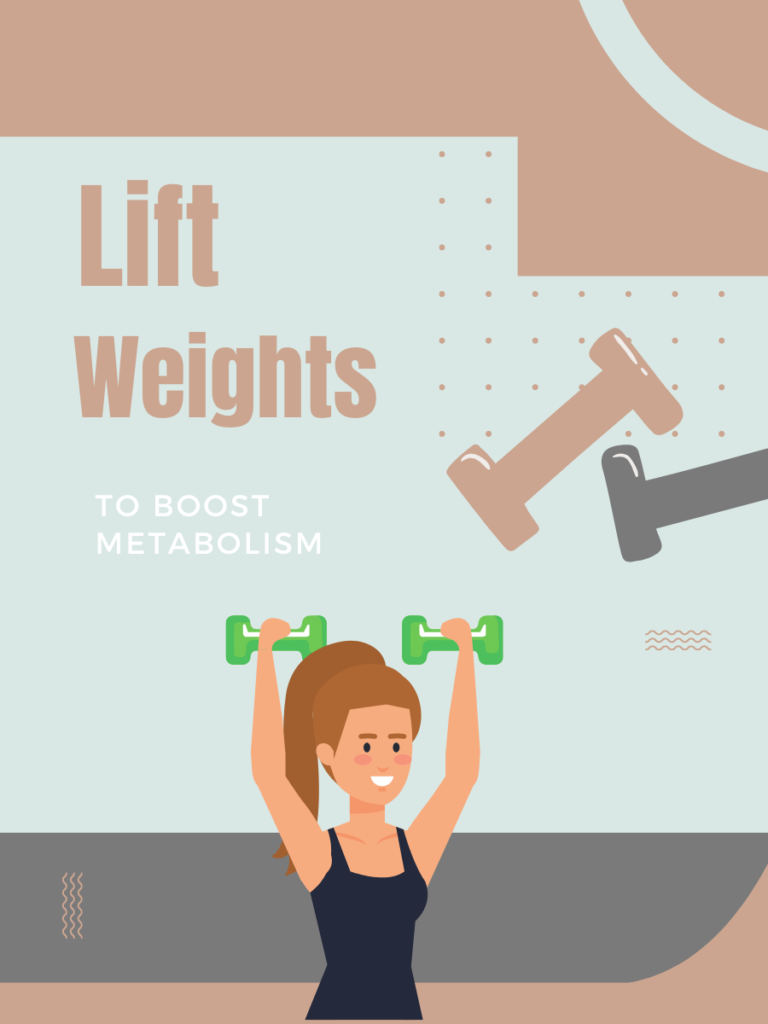
Include weight lifting in your exercise routine, aiming to work all major muscle groups at least twice per week. Avoiding loss of muscle mass is one way to maintain a vibrant metabolism as you age. Muscle burns more calories than fat so increasing muscle mass allows you to burn more calories at rest.
Habit 3: Manage Stress
An often overlooked metabolism wrecker is unmanaged stress. When you’re experiencing stress, your body releases cortisol. This fight-or-flight stress hormone’s job is to ensure your survival, so it temporarily slows all functions that aren’t necessary for immediate survival, including metabolism. When stress is chronic, your metabolism remains slow even though the stress you experience isn’t actually life threatening.
Finding methods to manage stress mitigates the metabolism-slowing side effect of chronic stress. We might not be able to immediately change a stressful life situation, but we can practice techniques that have a direct impact on our nervous system and allow us to effectively keep our bodies from remaining in a stress response. A licensed mental health therapist can help you work through difficult and challenging emotions and trauma, and general life stressors- we all have stress in our life. If seeing a therapist isn’t possible for you, consider some tried-and-true methods to manage stress like deep breathing, yoga nidra or other guided meditation. If you’re new to these methods, here are some links to my favorite YouTube tutorials that guide you through each stress-reducing strategy. Going for a walk (bonus if you get out in nature for your walk) and practicing yoga also have stress relieving effects.
Diaphragmatic Breathing: https://www.youtube.com/watch?v=vMjTJf4-xz0
Alternate Nostril Breathing: https://www.youtube.com/watch?v=mqS9wRMW1S4
Yoga Nidra: https://www.youtube.com/watch?v=HZpNxMI5ozg
Meditation: https://www.youtube.com/watch?v=9Xgi-Hn2siQ

Habit 4: Sleep
Research is ongoing for the mechanism by which decreased sleep slows metabolism and triggers weight gain, but while the mechanism might not be clear yet, the connection is crystal clear: multiple nights of poor sleep results in lowered metabolism and over a longer period of time, weight gain. Possible connections between poor sleep and slower metabolism could be from changes in metabolism regulating hormones like ghrelin and leptin that are altered with poor sleep. Sleep deprivation also decreases insulin sensitivity which can lead to higher blood sugar levels and impact the way our bodies metabolize fats.
We all have isolated nights when we either don’t get to bed in time for adequate sleep or we toss and turn and don’t get quality sleep. When sleep troubles are prolonged over the course of many days or longer, our metabolism takes a hit. You can make a few changes to ensure the best night sleeps possible:
- Ensure that you are in bed with enough time to allow for at least 8 hours of sleep.
- Avoid caffeine, including decaf coffee, after 12 PM.
- Avoid the blue light from screens in the evening
- Create a peaceful atmosphere in your bedroom.
For more tips on creating a good night’s sleep read this article.
How to Establish Healthy Habits
Now that you know what habits are most helpful to promote a healthy metabolism, it’s time to apply that knowledge. Let’s use behavior change science to create new habits that last.
Make one change at a time
Rather than trying to change your exercise, your eating, your sleep and your stress management skills all at once, pick one thing to change and stick with that for a few weeks until it’s part of your normal routine. Of course, it takes more than a few weeks to develop a solid habit, but after a few weeks of repeating the same behavior, you might feel ready to add on another healthy habit without feeling overwhelmed.
Shrink the change
Once you’ve decided what change you want to focus on, shrink the change.
Start small. For example, if you want to start doing HIIT workouts and you currently don’t workout at all, don’t plan to workout out for one hour 5 days a week. You’re more likely to either not get started because the change feels too big or burn out and only last a couple of days. Instead, decide what feels light and easy. You’re way more likely to follow through if it feels easy. Maybe do a 20 minute workout 3 days a week and if that feels like too much or you find yourself making excuses about why you didn’t do your workout, shrink it even more. You can build upon your habit and add longer or more frequent workouts as the habit becomes part of your routine.
Pair your habit with something you are already doing.
This idea from James Clear’s book Atomic Habits. If you haven’t read it, I whole-heartedly recommend reading if you are serious about habit change. Find it here. This idea of habit stacking increases the likelihood that you will follow through with your habit. If you want to create a habit of deep breathing throughout the day to regulate your nervous system, stack that habit with something you do frequently like going to the bathroom or eating. So every time you sit down to eat, begin your meal with a minute (or more) of deep breathing, or every time you leave the bathroom, pause to practice deep breathing.
Schedule Your Habits
Write your habits on your calendar just as you would any other appointment or commitment you make. If you plan to lift weights three times per week, pick the dates and times and put them on your calendar so you know nothing else interferes with your lifting session. Then, hold yourself accountable to your plan.
Exchange Undesirable Habits with More Helpful Habits
If you have a habit of scrolling social media before bed, swap that habit with something else like reading a book, stretching gently, or completing a yoga nidra meditation. Success here involves conditioning to respond differently to a stimulus. Our habits follow a predictable pattern, stimulus – behavior- reward. A stimulus triggers us to follow through with a behavior and that behavior leads to a reward. Might look like this- We get into bed (stimulus). We scroll on our phone (behavior). Our brains receive a dopamine hit (reward). Dopamine is our remember and repeat neurotransmitter so any behavior that triggers a hit of dopamine causes our brain to remember that the behavior is worth repeating, even when the behavior runs counter to our goals. Over time, we repeat the same behavior over and over again and it becomes automated in our brain. Now to change that habit loop, we have to exert some effort and conscious awareness to reprogram a new habit loop associated with getting into bed. If we get into bed and immediately begin reading a book, with repetition that behavior will eventually become automated.
Follow the 2-Day Rule
Avoid letting more than two days go by without doing your habit. If you allow more than 2 days, you’re developing the habit of not doing your habit.
Keep Your Streak Alive
Life happens and you might not always be able to fully engage in your new habit. Instead of doing nothing, do a shorter version of your habit. This requires a mindset shift from all-or-nothing thinking to something-is-better-than-nothing thinking. So if your habit is to do a 20 minute HIIT workout, but your kid is sick and you had a crazy busy day, instead of saying “screw it” and bailing on your workout, do a two minute HIIT workout. You keep your streak alive and the exercise will probably make you feel better too. Doing something is always better than doing nothing.