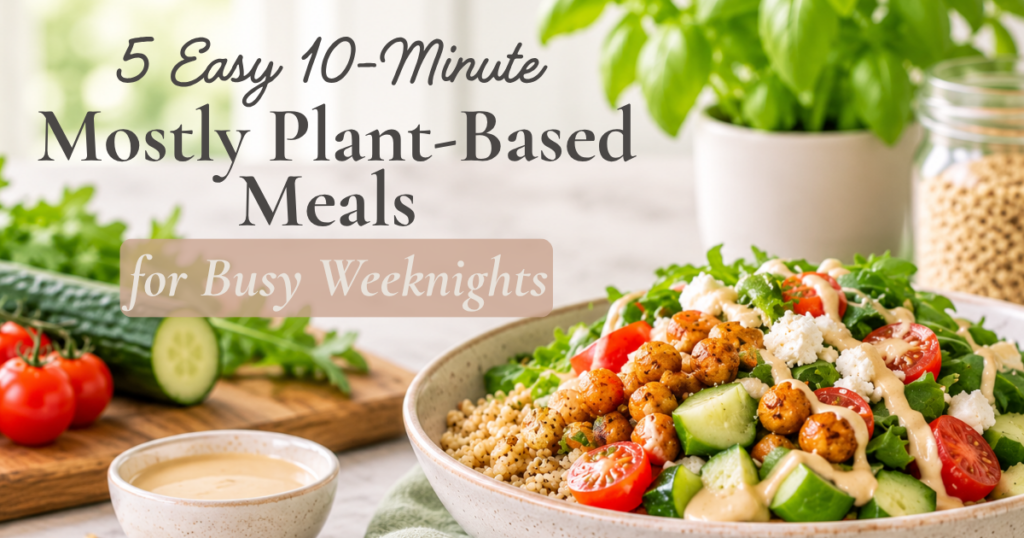
Eating more plant-based meals doesn’t have to mean spending hours in the kitchen or completely giving up meat.
In fact, one of the easiest ways to eat more plants is simply to make plants the foundation of your meals more often. Vegetables, beans, fruit, whole grains, nuts, seeds, and other plant foods can provide fiber and important nutrients while still leaving room for animal-based foods you enjoy. And the research shows that even a mostly plant-based approach can make a real difference for your heart and metabolic health.
Why eat mostly plant-based for heart and metabolic health?
The research is encouraging, and you don’t have to go fully vegetarian to benefit. A large study published in the Journal of the American Heart Association found that middle-aged adults whose diets were most plant-based had about a 16% lower risk of cardiovascular disease and a 31% lower risk of dying from it, compared with those whose diets were least plant-based. Part of the reason is fiber. A meta-analysis in The BMJ linked each extra 7 grams of daily fiber to roughly a 9% lower risk of heart disease, yet most American adults get only about 15 grams daily, well short of the recommended 25 to 38 grams. Plants also supply phytonutrients, natural compounds like flavonoids, carotenoids, and polyphenols. Many act as antioxidants, helping neutralize unstable molecules called free radicals that contribute to inflammation and damage blood vessels over time. Fiber-rich plant foods also slow digestion, which helps steady blood sugar and keeps you full longer, two big advantages for metabolic health and weight management. In fact, studies comparing plant-focused diets to typical eating patterns have found modest but meaningful weight loss, even without strict calorie counting. The takeaway is that small shifts, like making beans, vegetables, whole grains, and nuts the foundation of more meals, can add up to real benefits for your heart, blood sugar, and waistline.
If you’re busy, the key is keeping a few convenient ingredients on hand. Think canned beans, bagged salad kits, frozen vegetables, microwavable whole grains, hummus, eggs, and pre-cooked proteins.
Here are five delicious, satisfying, mostly plant-based meals you can put together in about 10 minutes.
1. Mediterranean Chickpea Grain Bowl
A grain bowl is one of the easiest meals to throw together when you don’t have time to cook.
What You'll Need
- 1 package microwavable brown rice or quinoa
- ½ – 1 cup canned chickpeas, rinsed and drained
- Cucumber, chopped
- Cherry tomatoes, halved
- Baby spinach or mixed greens
- Hummus
- Feta cheese
- Olive oil and lemon juice
- Fresh parsley
How to Make It:
Heat your rice or quinoa according to the package directions. Add it to a bowl and top with chickpeas, vegetables, hummus, and a sprinkle of feta cheese. Finish with a drizzle of olive oil and fresh lemon juice.
Why I Love This Meal
Chickpeas provide plant-based protein and fiber, while the vegetables, olive oil, and whole grains make this a simple Mediterranean-inspired meal.
Make it even easier: Use pre-chopped vegetables or whatever vegetables you already have in your refrigerator.
2. Black Bean Avocado Quesadillas
Quesadillas can absolutely be part of a balanced meal, and this version comes together quickly using mostly plant-based ingredients.
What You'll Need:
- Whole grain tortillas
- Canned black beans, rinsed and drained
- Shredded cheese (reduced fat if you want to decrease saturated fat intake)
- Avocado
- Salsa
- Optional: spinach or leftover vegetables
How to Make It:
Spread black beans over half of a tortilla. Add spinach or vegetables if desired and sprinkle with cheese. Fold the tortilla in half and cook in a skillet for 2–3 minutes per side, until warm and lightly crispy.
Top with avocado and salsa.
Why I Love This Meal:
Black beans add fiber and plant-based protein, while avocado provides satisfying unsaturated fat.
Nutrition tip: Serve with fruit or a simple side salad to add even more plants to your plate.
3. Hummus Veggie Wrap
This is one of my favorite meals for days when you don’t feel like cooking at all.
What You'll Need:
- Whole grain wrap or tortilla
- Hummus
- Bagged salad mix or spinach
- Shredded carrots
- Cucumber
- Bell pepper
- Avocado
Protein Additions:
- Chickpeas
- White beans
- Edamame
- Grilled chicken
- Leftover salmon
How to Make It:
Spread a generous layer of hummus on your wrap. Add greens, vegetables, avocado, and your preferred protein. Roll it up and enjoy.
Why I Love This Meal:
Hummus makes a quick and flavorful alternative to mayonnaise or creamy dressings while adding plant-based protein and fiber.
This is also a great option for lunch or a quick meal between activities.
4. 10-Minute Veggie and Egg Scramble
Eggs are a quick source of protein and pair perfectly with vegetables you already have on hand.
What You'll Need:
- 2 eggs
- A handful of spinach
- Frozen or leftover vegetables
- Cherry tomatoes
- Optional: black beans
- Optional: shredded cheese or avocado
How to Make It:
Heat your vegetables in a skillet until warm. Add the spinach and cook until wilted.
Whisk your eggs and pour them into the pan. Scramble until cooked through. Add black beans, cheese, or avocado if desired.
Serve with:
- Whole grain toast
- Fruit
- A small roasted potato
Why I Love This Meal:
You can easily use the Balanced Plate Method by filling your plate with vegetables, adding protein from eggs, and including a satisfying carbohydrate such as whole grain toast or fruit.
Don’t underestimate breakfast foods for dinner. They can be one of the fastest ways to get a balanced meal on the table.
5. Peanut Noodle and Edamame Bowl
This meal tastes like something much more complicated than it actually is.
What You'll Need:
- Quick-cooking whole grain or high-protein noodles, like brown rice noodles
- Frozen shelled edamame
- Shredded carrots
- Bagged coleslaw mix
- Peanut butter
- Soy sauce or coconut aminos
- Lime juice
How to Make It:
Cook your noodles according to package directions. During the last few minutes of cooking, add the frozen edamame.
While the noodles cook, whisk together:
- 2 tablespoons peanut butter
- 1 tablespoon soy sauce or coconut aminos
- Juice from ½ lime
- A splash of warm water to thin
Drain the noodles and edamame. Toss with the peanut sauce, shredded carrots, and coleslaw mix.
Why I Love This Meal:
Edamame provides plant-based protein, while the vegetables add volume, fiber, and nutrients. Peanut butter adds satisfying healthy fat and makes the meal feel more filling.
Optional: Add shredded chicken or shrimp if you want additional protein.
How to Make 10-Minute Meals Easier
The secret to quick, healthy meals isn’t being a great cook. It’s having convenient ingredients available.
Consider keeping these staples on hand:
Plant-Based Protein
- Canned beans
- Chickpeas
- Lentils
- Hummus
- Edamame (shelled, frozen edamame cooks quickly)
- Nuts and seeds
Quick Vegetables
- Bagged salad kits
- Pre-chopped vegetables
- Frozen vegetables
- Baby spinach
- Shredded carrots
- Coleslaw mix
Quick Carbohydrates
- Pre-cooked brown rice
- Pre-cooked quinoa
- Pre-cooked grain blend (my favorite is Seeds of Change Organic Quinoa & Brown Rice with Garlic & Lentils)
- Whole grain tortillas
- Whole grain bread
- Quick-cooking noodles
- Potatoes or sweet potatoes
Flavor Boosters
- Hummus
- Salsa
- Pesto
- Olive oil
- Lemon or lime juice
- Peanut butter
- Low-sodium sauces and seasonings
Convenience foods can absolutely be part of a healthy eating pattern. Buying frozen vegetables or pre-cooked grains can make healthy eating more realistic for your life.
You Don't Have to Eat Perfectly to Eat More Plants
A mostly plant-based eating pattern doesn’t require you to become vegetarian or vegan.
Instead, try thinking about adding more plants to the meals you’re already eating.
Add beans to your tacos. Add vegetables to your eggs. Include fruit with breakfast. Make half your plate vegetables when possible. Choose whole grains more often.
Small changes can add up over time.
The goal isn’t to eat perfectly. The goal is to create eating habits that are realistic enough to continue.
If you’re working on improving your heart health, metabolic health, cholesterol, blood sugar, or overall wellness, learning how to build quick and balanced meals can make healthy eating feel much more manageable.
At Pure Nutrition & Wellness, I help clients create personalized nutrition strategies that fit their real lives—without restrictive diets or complicated meal plans.
Because healthy eating should work for your life, not require you to completely reorganize it.
Ready to Make Healthy Eating Feel Simpler?
If you’re tired of wondering what to eat or feeling like healthy meals take too much time, personalized nutrition counseling can help you create a realistic plan that supports your health and your lifestyle.
Schedule a free inquiry call with Pure Nutrition & Wellness today.