

Creating a healthy meal plan can feel daunting, but it doesn’t have to be. Developing the skill of curating a well-structured meal plan can not only help you achieve your nutrition goals, but also save you time and money. Whether you’re aiming to lose weight, maintain a balanced diet, or provide nourishing meals for you and your family, investing time in the meal planning process is your best ally. Let’s break down the essentials to crafting a meal plan that works for your lifestyle and goals.
Why Create a Meal Plan?
If you’ve read many of my other posts, you’ve heard me reiterate what I learned from my middle school algebra teacher, “Failing to plan is planning to fail”. I didn’t like the sentiment back then (because homework and studying was not my jam in my early teen years), but there was wisdom in his words. When you don’t have a plan, you are just crossing your fingers and hoping for the best. I don’t have to tell you, that’s not a winning strategy. Here are my top 3 reasons for creating a meal plan.
- Promotes Healthier Choices: When you plan your meals, you’re less likely to opt for takeout or processed foods. This allows you to control your ingredients and portion sizes and leads to healthier eating habits. And if you’re like many, by the time dinner rolls around you have serious decision fatigue after an exhausting day at work or taking care of littles. Do you really want to have to decide what to cook at 5 pm? I didn’t think so. Waiting until the last minute to plan what you are eating also limits you to what you have on hand unless you want to add a trip to the grocery store to your evening to do list. If you’re coming home exhausted from your day, the drive thru or takeout may suddenly become extremely appealing, but so much less so if you already have a plan for what you’ll eat at home, especially if you’ve also taken time to do a little advanced meal prep to make cooking a breeze.
- Saves Time and Money: By planning your meals for the week, you can streamline grocery shopping and reduce impulse buys. This means fewer trips to the store and more savings in your pocket.
- Reduces Food Waste: Meal planning includes taking stock of what you already have in your freezer, refrigerator and pantry. This encourages using what you already have and finishing leftovers so they don’t go to waste.
Getting Started With Meal Planning
Like most things, meal planning becomes easier with more practice. After a few weeks of planning, you’ll be able to produce a healthy meal plan in mere minutes.
- Choose a specific time. Set aside at least 20 minutes of uninterrupted time to create your meal plan, preferably at the same time each week. Meal planning is about habit, so it really helps to consistently plan at the same time so it naturally becomes part of your routine. For obvious reasons, make sure your meal planning day falls prior to your grocery shopping day. Many of my clients have found that meal planning on Fridays and grocery shopping on Saturdays works well. Whatever day you pick, write it on your calendar to reserve that time in your schedule.
2. Collect your recipes. Grab your cookbooks, open your pinterest board or favorite food blog, dig out your recipe cards; just make sure recipes are handy. If you are using recipes from multiple sources, save yourself time later by writing down where you can find the recipe. For example, if it’s from a blog, copy and paste the web address to your meal plan or if it’s saved on a specific Pinterest board, record which board it’s on. This prevents you from having to search for the recipe all over again when you’re ready to cook.
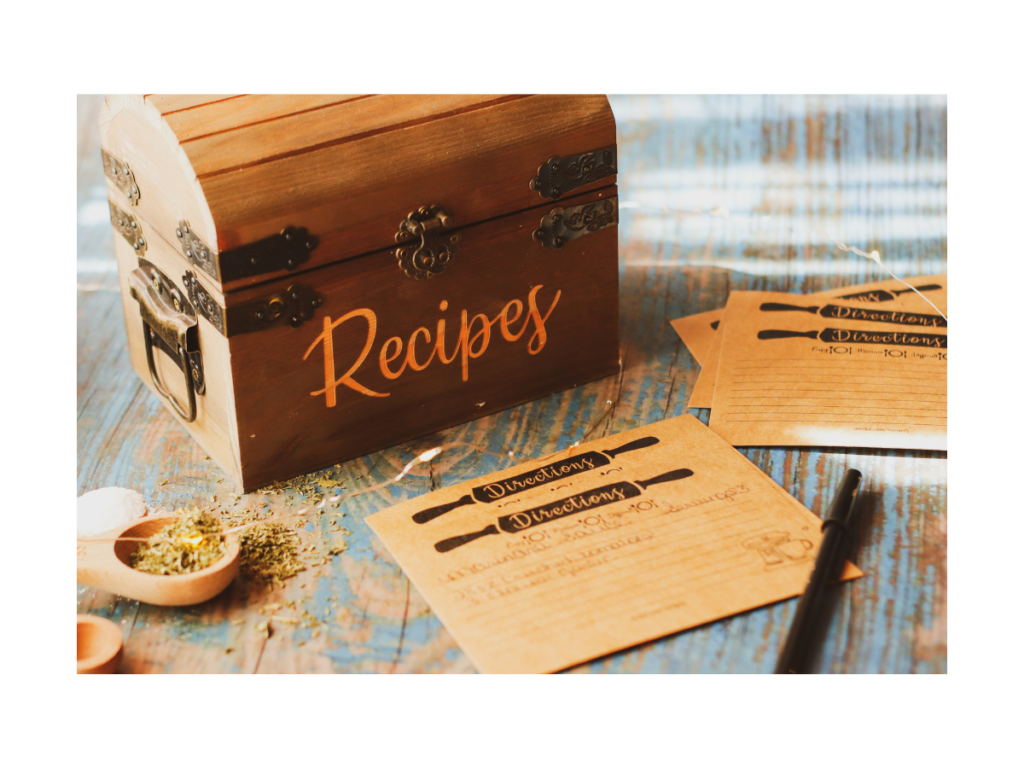
3. Choose a Planning Strategy. Do you want a meal plan for supper only? Breakfast, lunch and dinner? All of your meals plus snacks? There’s no right or wrong way to plan. If you are new to meal planning, I recommend starting with just one meal, whichever meal presents the biggest “problem” for you. So if you find yourself stopping at Starbucks for coffee and a pastry for breakfast but you eat well the rest of the day, breakfast is a good place to start. You can always add other meals as you master your breakfast meal planning routine. While most of my clients plan for one week at a time, there’s no rule that says that’s the right way to do it. You could plan for a month at a time or you could plan for a few days at time. How often you want to grocery shop impacts the time span you plan for.
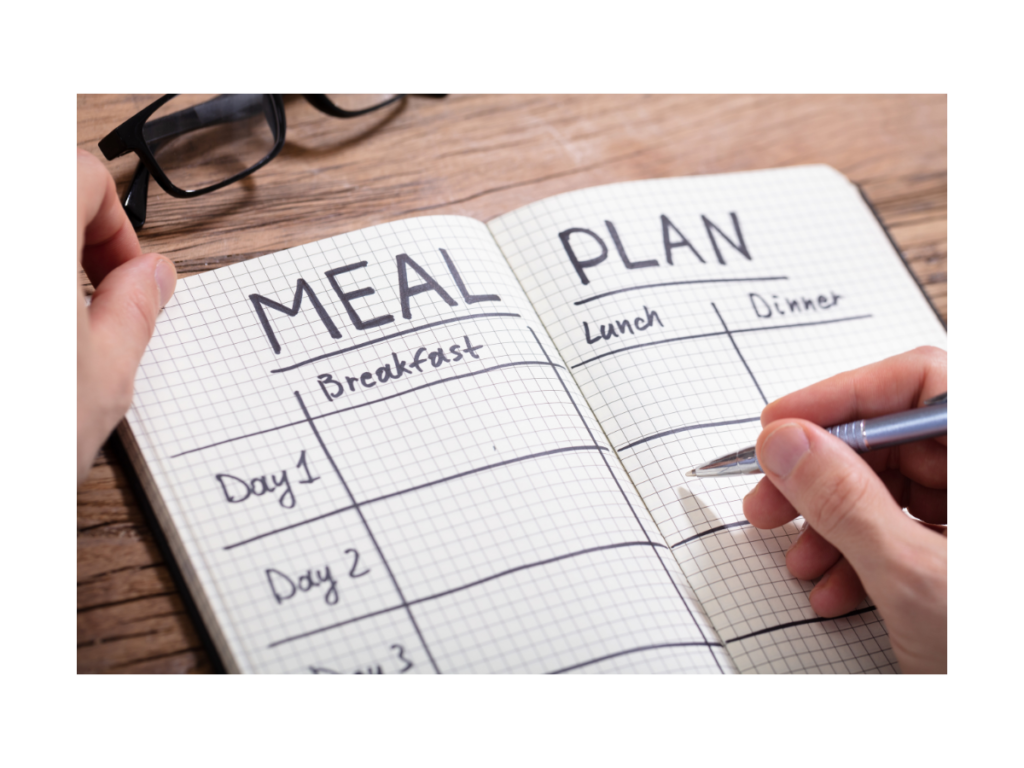
4. Choose How You Will Record Your Plan. Rather than trying to remember your meal plan in your head, consider using a calendar, notebook, or google doc. Many of my clients prefer using a pre-designed template in a google doc- this type of template allows easy access later to make future meal planning even faster and doesn’t cause any extra clutter in your home. I keep a monthly meal planning template in my google drive and every month, I make a copy of the template to edit each week with my meal plan. After years of doing this, I can copy a month from 3 or 4 years ago if I want to, and that makes meal planning a breeze. Others opt to record their meal plans in their weekly planner or small notebook. Whether it’s a digital app or a classic planner, find a method that works for you. This will help you stay organized and committed.
5. Assess Your Week. Take a look at your schedule. Identify busy days when you’ll need quick meals and days when you have more time to cook. Decide how many meals you will need and if there are any days you’ll be eating out. Make sure your calendar is up-to-date with all the activities you have planned for the week and use this to create a realistic meal plan. Avoid planning a meal with a long cook time on a night when your kids have practice- if that’s every night for you like it is for me, just do the best you can and recognize that busy evenings make meal planning and prepping especially essential! Avoid the drive thru by planning crockpot meals, leftovers, or super quick meals on evenings when you are on the go and consider leftovers for the busiest evenings. You can even plan to cook a couple larger meals so that you have leftovers a few times a week. Having a COF night (Clean Out the Fridge) can help to prevent food going to waste and save you some time.

6.Create a Balanced Menu. Keep the balanced plate framework in mind as you plan. To learn more about what a balanced plate looks like, read this. In general, your meals are balanced when they contain a protein, fat, starch and non-starchy vegetables.
Here’s a simple, balanced weekly dinner meal plan to inspire you:
Monday: Pesto chicken with tomato basil pasta, steamed broccoli and a garden salad
Tuesday: Tacos with ground turkey, black beans, guacamole, chopped lettuce and fresh salsa
Wednesday: Grilled Salmon with farro, roasted asparagus and a side salad
Thursday: Madras lentils with ancient grains and steamed vegetables
Friday: Egg Roll in a bowl made with ground turkey, riced cauliflower, cabbage carrots and quinoa.
Saturday: Slow cooker chili with beans and corn
Sunday: “COF Night” Leftovers and meal prep for the week ahead!

7. Include Variety. Balance is important, but eating a variety of foods has health benefits too. It’s ok if some of your meals tend to be the same- I often find myself cycling through the same few breakfast and lunch options, so I make an effort to eat a variety of foods at dinner throughout the week. Aim for a variety of lean proteins, veggies, fiber-rich starches, and healthy fats. For example, as you plan the protein portion of your meals, consider eating fish a couple nights, chicken or turkey a couple nights, maybe a night of vegan proteins and one dinner with beef. Aiming for a variety of proteins rather than having chicken every night of the week allows you to reap the benefits of the various vitamins and other nutrients in different types of protein-rich foods. Do the same with starches, fats, and non-starchy veggies.
8. Picture the Meal. Visualize what the meal will look like on your plate. Is it colorful? Does it look appetizing? Aim for multiple colors because this not only makes the meal more appealing, but also increases the phytochemicals and nutritional composition of the meal. Picture this: a plate with salmon, carrots and a sweet potato. Does that look good to you? It might be a healthy meal but you can improve it by adding some colorful foods- swap broccoli for the carrots to add a pop of color.
9. Consider your cooking preferences and family’s eating style. Would you rather cook in bulk one time per week and eat leftovers for a few days? Consider options for cooking one item that can be used in various ways so that you are eating leftovers, but not the same exact meal for multiple days. For example, one large batch of shredded chicken can be used in a casserole, on tacos, in soup, etc.
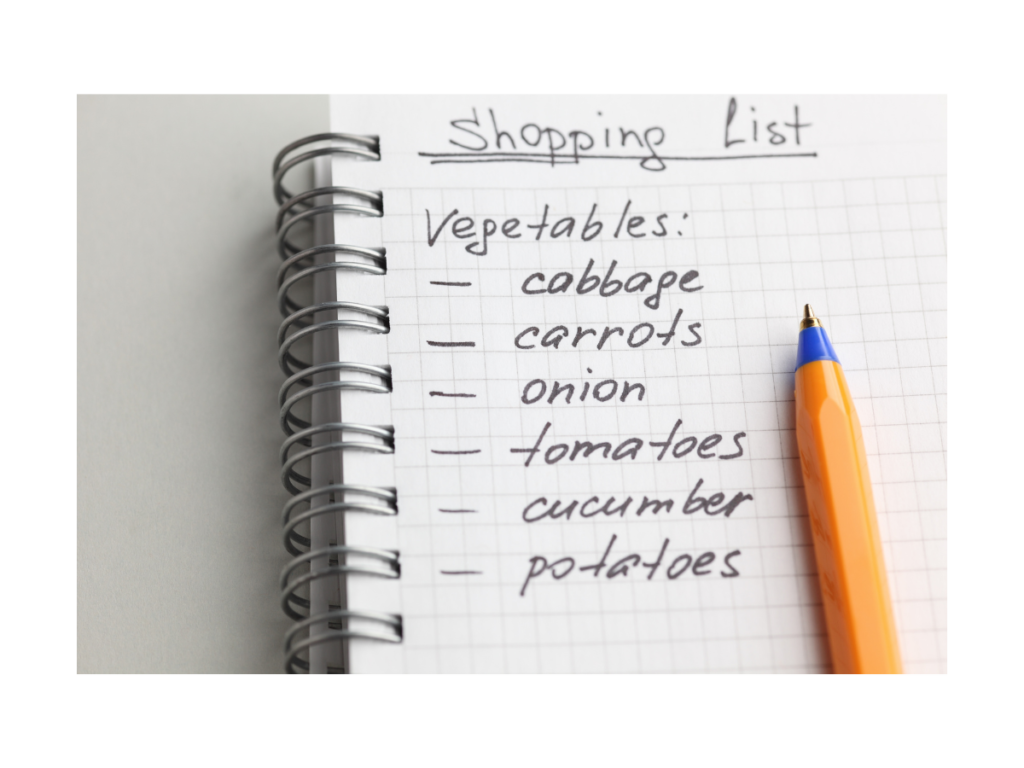
10. Make a shopping list. As you create your meal plan, list all the ingredients you need. Stick to this list to avoid impulse purchases. Take time to check your refrigerator, freezer and pantry to see what you already have. This not only ensures that you’ll have what you need for your meals, but also saves you time and money- you won’t purchase something you already have and you’re more likely to skip the impulse buys and stick with what’s on your list.
11. Stay Flexible. Life happens! Be open to adjusting your plan as needed. Having a few easy go-to recipes can help, or keep some healthy frozen meals or pantry staples on hand for those busy days. The key is to make healthier choices more often, not to be perfect.
12.Reflect and Adjust. At the end of each week, take a moment to reflect on what worked and what didn’t. Make a note directly on your meal plan document or in a notebook where you can review as needed. Include notes on foods your family loved or really didn’t like at all. Jot down your ideas for improving the nutritional quality of the food (maybe there’s an easy veggie you can add) or make a note of ideas for expediting the cooking process (maybe you learned you really need to do some weekend meal prepping for certain meals).
13.Develop Your Meal Repertoire. Over time, create a list of quick meals that you know your family enjoys. You can use these as go-to’s when time is slim or you can develop a group of dinners that you cycle throughout the month.
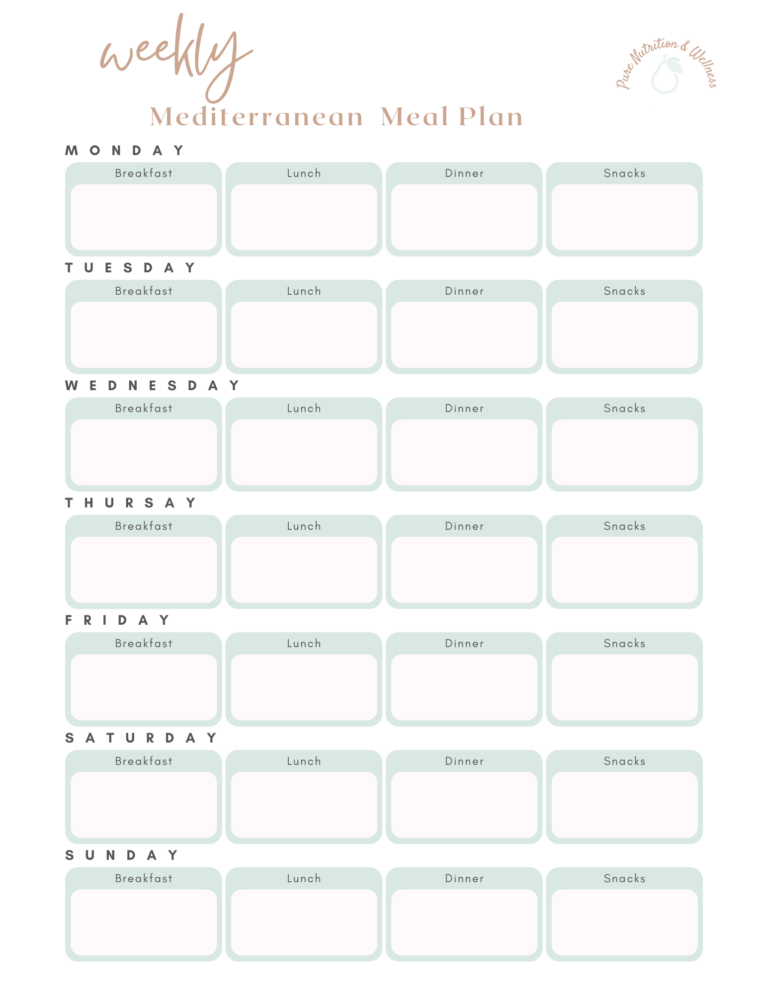
Ready to start meal planning? Share your favorite meal prep tips in the comments below! Need expert guidance to create the ultimate meal plan? Schedule a free inquiry call with Pure Nutrition and Wellness to learn how a dietitian can help you create a realistic and healthy meal plan for you and your family.
Remember, creating a healthy meal plan is all about setting yourself up for success. With a little planning and creativity, you can nourish your body while enjoying delicious meals. Give it a try, and watch your week transform!
Happy meal planning! 😀