
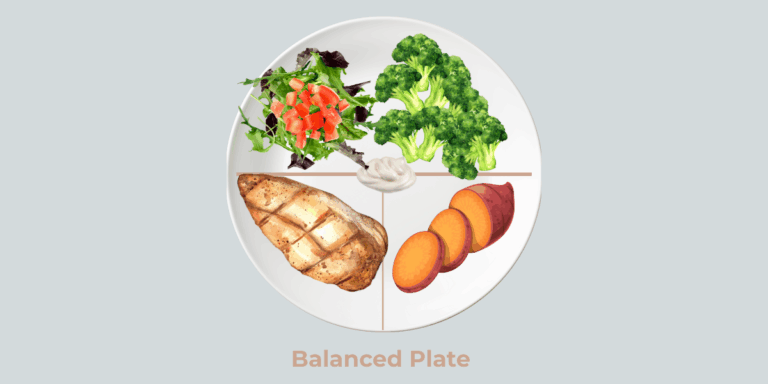
 Non-Starchy Vegetables
Fill ½ your plate
Packed with fiber, vitamins, and minerals
Examples: broccoli, spinach, peppers, zucchini, leafy greens
Keeps you full with very few calories
🍗 Protein
Aim for ¼ of your plate
Supports muscle, metabolism, and satiety
Examples: chicken, turkey, fish, eggs, beans, Greek yogurt
Helps prevent blood sugar spikes
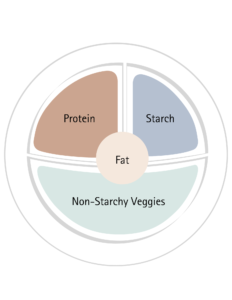

Step 1: Load Up on Non-Starchy Vegetables
Start by filling half your plate with non-starchy vegetables (NSVs). These colorful veggies like broccoli, peppers, zucchini, leafy greens, and cauliflower that provide big nutrition with very few calories.
 What if you’re eating from a bowl or having a casserole-style meal?
The “half your plate” visual isn’t as clear, so think about proportions instead: aim for about half of the food you’re eating to be non-starchy veggies. If your dish comes up short, simply add a side of vegetables, like a small salad, roasted broccoli, or sliced cucumbers, to help balance it out.
The beauty of this method is its simplicity: no counting, no weighing, no measuring. You’re just eyeballing it. And it doesn’t need to be perfect- every extra veggie adds up.
 Why Non-Starchy Vegetables Matter:
Naturally low in calories and carbs
High in fiber, which keeps you full and supports digestion
Packed with vitamins, minerals, and antioxidants that fuel long-term health
Both starchy and non-starchy vegetables play an important role in a healthy diet, but their key difference is in their starch content. Starchy vegetables (like potatoes, corn, and peas) contain more carbohydrates and calories because starch breaks down into glucose (sugar), providing quick energy. Non-starchy vegetables, on the other hand, are light, nutrient-dense, and help balance your plate without spiking blood sugar.
So, when building your balanced plate, start with non-starchy veggies first. Once you’ve filled half your plate with them, we’ll add in protein, starches, and healthy fats to round out the meal.
 Step 2: Add a Serving of Starchy Foods
Once your plate is half full of non-starchy vegetables, the next step is to add about ¼ of your plate with starchy foods.
What counts as “starchy”?
This category includes starchy vegetables like potatoes, corn, peas, and winter squash, as well as other starch-rich foods such as brown rice, oats, quinoa, beans, and whole-grain bread. These foods are naturally higher in carbohydrates and calories than non-starchy vegetables because they contain more starch, a type of complex carbohydrate that your body breaks down into glucose (sugar) for energy.
Both starchy and non-starchy foods are important for health, but they play different roles. Non-starchy veggies provide bulk, fiber, and lots of nutrients for very few calories, while starchy foods provide steady fuel, more calories, and a wide range of vitamins, minerals, and fiber (especially when you choose less processed options).
Processed vs. Less Processed Starches
Not all starches are created equal:
Less processed starches, such as sweet potatoes, beans, lentils, oats, quinoa, brown rice, and whole-grain bread, contain fiber, vitamins, minerals, and plant compounds that support digestion, heart health, and stable energy.
Highly refined starches, like white bread, white rice, chips, and pastries, are stripped of much of their fiber and nutrients. They digest quickly, leading to blood sugar spikes and less satiety.
This doesn’t mean you can never enjoy refined starches, but focusing most of your choices on whole, nutrient-rich starches will help your body feel more energized and satisfied.


 Step 4: Include Healthy Fats
The final piece of a balanced plate is healthy fat. Fats often get a bad reputation, but they’re an essential part of a nourishing diet. Adding the right kinds of fats to your meals supports your health in powerful ways:
Why Healthy Fats Matter:
Provide long-lasting energy
Keep you satisfied after meals
Help your body absorb fat-soluble vitamins A, D, E, and K
Support hormone balance
Play a role in brain and nervous system health
Contain anti-inflammatory properties that protect long-term health
Add flavor and richness that make food more enjoyable
 Easy Ways to Add Healthy Fat to Your Plate:
Sprinkle nuts or seeds on a salad
Sauté veggies in extra virgin olive oil or avocado oil
Add sliced avocado to tacos, sandwiches, or bowls
Mix nut butter into oatmeal or smoothies
Use olives or olive oil as a flavorful addition to meals
 Best Sources of Heart-Healthy Fats:
Focus mainly on unsaturated fats such as:
Extra virgin olive oil
Avocado oil
Avocados
Olives
Nuts and seeds (almonds, walnuts, chia, flax, pumpkin seeds)
No need to add a large amount of healthy fats, often just 1–2 tablespoons or a small handful is enough to boost nutrition and flavor while keeping your plate balanced.
Fruits
You may have noticed that the balanced plate framework doesn’t specifically include fruit. That doesn’t mean fruit isn’t important, it absolutely is! Fruit is rich in fiber, vitamins, minerals, and phytonutrients that support overall health and help protect against disease.
Most people benefit from eating at least two servings of fruit per day, but it’s not necessary to include fruit at every single meal. Think of fruit as a flexible add-on to your balanced plate rather than a required component or enjoy fruit as part of a snack.
Pro tip: Because fruit is naturally higher in sugar, it’s best enjoyed alongside a protein source (like Greek yogurt, nuts, or cheese). Pairing fruit this way helps minimize blood sugar spikes while still giving you all the nutritional benefits. So if you’re grabbing an apple for a quick afternoon snack, pair it with peanut butter or cheese cubes- snacks should be balanced too!
In short: fruit has a valuable place in a balanced eating plan, but you don’t have to include it in every meal.
The balanced plate framework isn’t a strict set of rules, it’s a flexible guide to help you build meals that are both nourishing and satisfying. Think of it as a visual tool you can use to create balance without counting calories or weighing food.
A simple way to keep portions in check is to use a 9-inch plate (instead of the larger 12-inch dinner plate) and mentally divide it into sections as you add food. You can also pair this with the hand portioning method for extra guidance. Here’s what that looks like in practice:
-
Non-starchy vegetables: about two fist-sized portions (roughly half your plate)
-
Starch / fiber-rich carbs: one to two cupped handfuls (about ¼ of your plate)
-
 Protein: one to two palm-sized portions (about ¼ of your plate)
 -
Healthy fats: one thumb-sized portion, often built right into your meal (like olive oil on roasted veggies or avocado on a salad)
Using visuals like the plate method or the hand portion method takes the guesswork out of portioning and makes it easier to consistently create balanced meals.
And remember, balance doesn’t have to mean perfection. Every step toward a more balanced plate is a step toward better energy, health, and well-being. If you’d like personalized guidance, like setting custom macros or tailoring your nutrition to specific fitness or health goals, consider reaching out to Pure Nutrition and Wellness or working with a registered dietitian. Many insurance plans cover preventative nutrition counseling in full!
